cartoni online  
Hulk
Hulk

HULK

Hulk

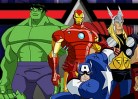
Hulk is born in 1962 to work of the pair of the wonders which Stan Lee to the subject and Jack Kirby to the designs. The Hulk name, in originates them American means large, awkward, grotesque individual and in fact this personage is the same symbol of the force. The history of Hulk has beginning when the scientist American Bruce Banner comes person in charge from the minister of the defense American, in order to experience one bomb to the range beams, in the desert of the New Mexico. It happened but, that during the count down, before the outbreak, the young person Rick Jones, unaware of of all, it rambled for that zone, therefore with a heroic gesture, the scientist Bruce Banner, was thrown on the body of the boy, hurl he in a ditch and exposing itself in first person to the outbreak of the range beams. Bruce Banner in spite of the violence of the cancellations, survived, but something of incredible happened to it. During the sunset Dr. Banner transformed itself in the incredible Hulk, a giant from the grey skin and the superhuman force, while to the first lights of the dawn he returned to take its shape human. Beginig therefore, the transformation only happened to the sunset, but with passing of the time, in whichever hour of the day, if Dr. Banner endured some strong emotion, like an attack of fury, it lose uncoscious of if and this time from the color of the green skin were transformed in the incredible Hulk, exploding in all its centuple force from the temper. Through this fault transformation, Hulk is considered a danger for the society, therefore the scientist Bruce Banner holds secret which he considers a its fort handicapp (also the superhero has superproblems here). Hulk comes in particular therefore persecute from the men and the military forces commant from implacable general Ross.

Hulk, as it has been said, has various transformations. It can be Green or gray. In its transformation with the grey skin Kg catches up an equal height to 2,00 mt for a weight of approximately 400, while in its transformation with the green skin, catches up a height of approximately 2,15 mt and a weight of approximately 475 Kg of muscles. The superpowers of the incredible Hulk are give you from one extraordinary physical, advanced force also to that one of the Thing, the stone-man of Fantastic the Four. Thanks to the enormous power in the legs, Hulk can copiere of the powerfull leaps, succeeding to little cover distances of various kilometers in short time. Moreover the wounds that for we could be died them, for he can heal in short time in how much have a high curative power.

For a short period the scientist Bruce Banner is successful to control its splitting of personality, succeeding to enter in the conscience of Hulk also during its transformation, therefore is successful to catch up a truce with the Armed Forces Americans who have stopped to chase it. In this Hulk period it has made part of the group of the superheroes Marvel "the Vendicatori". But he happened that Dr. Leonard, a psichiatra, expert of range beams succeeded to capture Hulk and to separate the psiche of Bruce Banner from that one of the giant from the green skin, modifying of deeply its ego. This has caused of the serious damages much in the personality of Hulk that reverting is returned to become an enormous danger for the humanity. An other psichiatra instead, Dr. Samson is successful to integrate intelligence of Bruce Banner with that one of Hulk exactly, creating therefore an intelligent Hulk called "professor" Hulk.

Hulk with to Dr. Strange, a wizard expert of magical limbs and Namor, the prince of Atlantis, forms the group of the defenders and they join periodically for oppose to the forces of the evil and in particular to Yandroth, a powerful wizard who threatens the existence of the earth. Although defeated from the trio perfido the Yandroth in point of dead women malediction has launch one on their witness.

In years ' 80, the incredible Hulk has had a great notoriety above all thanks to the television film Americans to he dedicates to you, but that they had one various weft from the superhero Marvel. In fact Dr. Banner, (interpreted the best Bill Bixby) is a scientist who tries to study as the range beams can influence on the force of an individual in state of temper. He comes but invested from a cancellation and he transforms himself therefore in the monster from the green skin, the incredible Hulk (interpreted from the mythical Lou Ferrigno). After the incident, than cause also the dead women of the wife, Bruce Banner comes thought dead man, therefore obsessed from its splitting of personality, decides to escape and to change name, making itself to call David. Only that suspects the its true identuità is journalist Jack McGee, than it chases it to hunting of a possiblie scoop.

From Ink to Pixels: The Definitive Analysis of How Hulk Redefined the Mythos of Marvel's Gamma-Powered Rage Monster

For those of us who've been hitting the long boxes for thirty years, the Hulk occupies a peculiar position in the Marvel pantheon. Born in May 1962 from the legendary collaboration of Stan Lee and Jack Kirby—the duo that essentially built the House of Ideas—Bruce Banner's jade-skinned alter ego represents something profoundly different from the bright optimism of Spider-Man or the cosmic grandiosity of Thor. The Hulk is Marvel's id made flesh, a walking Freudian nightmare that predates our modern understanding of dissociative identity disorder by decades.

The character's genesis reflects the atomic anxiety of the Cold War era, a direct response to America's nuclear paranoia. Lee and Kirby weren't subtle about this: a gamma bomb test, the southwestern desert, the specter of radioactive mutation. It's Frankenstein meets Dr. Jekyll and Mr. Hyde, filtered through the lens of post-Hiroshima dread. What's remarkable is how quickly the concept evolved. That initial gray-skinned brute from The Incredible Hulk #1 lasted exactly six issues before cancellation—a commercial failure that would have killed most characters permanently.

Yet the Hulk endured, resurfacing in Tales to Astonish #60 (October 1964) and gradually transforming into the green-skinned, articulate savage we recognize today. This wasn't just Stan Lee tinkering at the margins; this was fundamental character reconstruction happening in real-time on newsstands. By the time Herb Trimpe and Sal Buscema were defining the visual language of the character in the 1970s, the Hulk had become something else entirely—a tragic figure perpetually hunted, misunderstood, seeking only to be left alone. "Hulk just want to be left alone" wasn't just a catchphrase; it was the character's entire dramatic engine.

When animation studios began adapting Marvel properties, the Hulk presented unique challenges. How do you translate a character whose entire appeal rests on physical transformation and destructive power into a medium constrained by Saturday morning broadcast standards and limited animation budgets? More importantly, how do you honor the nuanced psychological complexity that writers like Peter David would later explore in his legendary twelve-year run (1987-1998), while still making the character accessible to children eating cereal before school?

The answer, as we'll explore, has varied wildly across five decades of animated adaptations—from the rotoscoped stop-motion of the 1966 Marvel Super Heroes segments to the surprisingly sophisticated CGI work in modern Disney+ properties. Each era's approach tells us something about not just animation technology, but about how corporate America has understood—or misunderstood—what makes this character resonate.

Fidelity vs. Creative License: Scripting the Canon

The 1966 Grantray-Lawrence Animation adaptation deserves recognition as the patient zero of Hulk animation, even if watching it today feels like archaeological excavation. Using the "Synchro-Vox" technique—essentially animating comic panels with moving mouths—these seven-minute segments were less "animation" than illustrated radio drama. Max Ferguson voiced both Banner and Hulk, which created an unintentionally effective doubling effect, though the production values were closer to educational filmstrips than entertainment.

What's notable from a canon perspective is that these early segments hewed remarkably close to Lee and Kirby's original Tales to Astonish material. The origin story remained intact: Banner saving Rick Jones during the gamma bomb test, the sunset transformations (an early conceit quickly abandoned in the comics), Betty Ross as the love interest, and General "Thunderbolt" Ross as the relentless pursuer. The rogues' gallery—Leader, Metal Master, the Ringmaster—came directly from those early issues. This wasn't interpretation; it was straight adaptation, respecting the source material's DNA because, frankly, there wasn't enough material yet to deviate from.

The 1982-1983 Marvel Productions series, voiced by Bob Holt and Michael Bell, represents the first real attempt at narrative expansion within animation. This version appeared during what comic historians call the Bronze Age's twilight—John Byrne had just revolutionized the X-Men, Frank Miller was about to deconstruct Daredevil, and Marvel was beginning to understand that complexity sold books. The animated series introduced Jennifer Walters as She-Hulk (her comic debut was 1980's Savage She-Hulk #1), demonstrating a willingness to incorporate contemporary continuity. However, the episodic nature and villain-of-the-week structure felt regressive compared to what was happening in the comics. While Peter David was beginning his run that would explore Banner's childhood trauma and multiple personality disorder, the cartoon presented a sanitized, one-dimensional conflict.

The 1996-1997 series—later retitled The Incredible Hulk and She-Hulk—arrived during Marvel's darkest financial period, just before the company's bankruptcy filing. Marvel Studios and Saban Entertainment understood they needed something different. Lou Ferrigno, forever associated with the character from the live-action series, voiced the Hulk, providing crucial continuity for audiences. More significantly, this version attempted to incorporate the Gray Hulk persona (Joe Fixit), acknowledging the character's evolving complexity. The series featured Doc Samson in his first animated appearance, a character whose role as psychiatrist was essential to Peter David's acclaimed run.

Here's where we need to talk about creative compromise versus brand integrity. The show made Glenn Talbot eventually "see the error of his ways"—a frustrating simplification of a character whose obsessive pursuit defined decades of stories. The Leader's Gamma Warriors felt like transparent toy-line material rather than organic storytelling. Yet the series deserves credit for attempting psychological depth in Banner's characterization, even if broadcast standards prevented true exploration of the childhood abuse storylines that David had made canonical in comics.

The 2008-2012 era saw multiple Hulk appearances across The Super Hero Squad Show, The Avengers: Earth's Mightiest Heroes, and Ultimate Spider-Man. These represented the post-MCU paradigm shift—Marvel Entertainment, now owned by Disney, was building a unified brand identity across all media. Fred Tatasciore became the definitive voice of the Hulk across these properties, much as Kevin Conroy defined Batman for a generation. Earth's Mightiest Heroes particularly excelled at respecting comic continuity, adapting elements from key storylines while creating original narratives. The animation quality had evolved exponentially from the 1980s limitations, allowing for proper weight and physics in the action choreography.

Hulk and the Agents of S.M.A.S.H. (2013-2015) represented Marvel Animation's most ambitious Hulk project—a series centered entirely on the character and his extended family. This was Marvel explicitly building a "Hulk corner" of their animated universe, complete with She-Hulk, Red Hulk, and A-Bomb. The meta-commentary structure, with the team filming their own reality show, felt like Marvel attempting to replicate the self-aware humor of comics like Dan Slott's She-Hulk run. Whether it succeeded is debatable. The series prioritized action over introspection, which fundamentally misunderstands what makes Hulk compelling—it's not the smashing; it's the tragedy beneath the smashing.

Hulk and the Agents of S.M.A.S.H

Super-Iconography: Visual Design and Power Dynamics

Costume Restyling and Anatomy

The visual evolution of animated Hulk designs charts the aesthetic trajectory of American animation itself. The 1966 version, constrained by its rotoscoped source material, presented a Hulk that looked exactly like Jack Kirby's original design—massive brow ridge, exaggerated musculature, torn purple pants (the only garment that survives transformation, a detail that deserves its own essay about comic book physics). Kirby's Hulk was all dynamic angles and explosive energy, designed for static panel impact rather than fluid motion.

By the 1982 series, animation studios had developed a house style influenced by Hanna-Barbera's cost-effective techniques. The Hulk became smoother, less angular—his proportions adjusted for character consistency across cel animation. This version looked less like Kirby and more like Sal Buscema's cleaner, more streamlined interpretation. The anatomical exaggeration remained, but the character design prioritized animation cycles over comic book dynamism.

The 1996 series made a fascinating choice by incorporating multiple Hulk personas visually. The Gray Hulk (voiced by Michael Donovan) had a distinctly different design—shorter, stockier, with a more brutish face. This respected Peter David's establishment of the Gray Hulk as a separate identity representing Banner's repressed selfish desires, distinct from the Green Hulk's childlike rage. The "Dark Hulk" (voiced by Kevin Michael Richardson) pushed even further into horror territory, with black skin and a more demonic appearance. These weren't just palette swaps; they were legitimate attempts to visualize psychological fragmentation.

The Marvel Animation era (2010-2015) brought us closer to a "comic-accurate" design than ever before. Modern digital animation allowed for muscle definition, detailed facial expressions, and proper scale representation. The Hulk in Avengers: Earth's Mightiest Heroes looked like he'd stepped directly from a Dale Keown or Gary Frank illustration—massive, imposing, with genuine weight to his movements. The CGI revolution enabled animators to show skin texture, individual muscle groups flexing, veins popping during moments of extreme rage. This wasn't Saturday morning compromise; this was fidelity to the source material's visual power fantasy.

Power Choreography and Action Beats

Here's where animation either succeeds or fails in adapting the Hulk: conveying the sheer force of a character who operates at planetary-threat levels. In comics, artists like John Romita Jr. or Mark Bagley could draw a single splash page showing the Hulk's fist impact creating seismic shockwaves—the reader's imagination fills in the kinetic sequence. Animation has no such luxury; it must show every frame of motion.

The early attempts failed spectacularly at this. The 1966 segments had no real "action"—just comic panels with minimal movement. The 1982 series tried, but limited animation budgets meant most "fights" consisted of the Hulk grabbing villains and shaking them while speed lines indicated motion. There was no weight, no physics, no sense that this character could "leap miles" or "lift mountains" as the comics claimed.

The 1996 series made genuine progress. Directors understood that the Hulk's jumps needed proper arc trajectories, that his landings should crater the ground, that when he punches through a wall, debris doesn't just disappear—it becomes projectiles. The show incorporated genuine destruction physics, probably influenced by the success of anime like Dragon Ball Z which had raised audience expectations for power-level visualization.

But it's the post-2008 era that finally cracked the code. Ultimate Avengers (2006) and Planet Hulk (2010) animated films demonstrated what proper budget and talent could achieve. These weren't TV animation constraints—these were feature-quality productions that understood the Hulk's power needed to feel apocalyptic. When this Hulk hit something, the camera shook. The sound design was crucial: bass-heavy impacts, environmental destruction audio, the character's roar mixed to suggest massive lung capacity. This was cinematic direction applied to animation, treating the material with the gravitas previously reserved for theatrical releases.

Rogues' Gallery and Ideological Nemeses

The Hulk's villains present unique adaptation challenges because they're rarely just "strong guy Hulk fights." The Leader isn't threatening because of physical power—he's a gamma-irradiated super-genius, Banner's intellectual equal corrupted by ambition. The Abomination is stronger than baseline Hulk but lacks the rage-scaling that makes Hulk theoretically limitless. These are philosophical opposites: intellect versus emotion, static power versus dynamic rage.

Animation has historically struggled with this nuance. The Leader in various series often devolves into generic "take over the world" schemes rather than the psychological warfare that defined his best comic appearances. The 1996 series at least attempted to make him Banner's dark mirror—what happens when genius lacks compassion. The Abomination fared better visually; his more monstrous design immediately communicated "wrong" transformation compared to Hulk's raw power aesthetic.

General Thaddeus "Thunderbolt" Ross deserves special mention as the Hulk's most persistent antagonist who isn't technically a villain. His ideological opposition—that Banner is a weapon of mass destruction that must be controlled—has validity. The best animated versions present Ross as sympathetic, even correct from certain angles. The 1978 live-action series understood this, making the pursuit feel like legitimate law enforcement rather than simple antagonism. Animated versions often simplified Ross into "angry military man," losing the tragic dimension of a father figure who genuinely believes he's protecting his daughter and country.

Cultural Impact: From the Spinner Rack to Global Streaming

The Hulk's animated presence has fundamentally shaped how multiple generations understand the character, often superseding comic book canon in the popular consciousness. For millions of viewers globally, Lou Ferrigno's voice work in the 1996 series or Fred Tatasciore's performances in modern Marvel Animation defined what the Hulk "sounds" like more than any comic book sound effect lettering ever could.

Tatasciore, in particular, deserves recognition as the Kevin Conroy of the Hulk—the actor who understood that the character needs multiple vocal registers. His Hulk can be childlike ("Hulk smash!"), terrifying (guttural roars), even melancholic (quiet moments of confusion). This range appeared across The Avengers: Earth's Mightiest Heroes, Ultimate Spider-Man, Hulk and the Agents of S.M.A.S.H., and countless other properties. When Disney+ produces new Marvel Animation content, Tatasciore's involvement provides crucial continuity for audiences who've grown up with his interpretation.

The international impact cannot be understated. The 1996 series aired in over 40 countries, dubbed into multiple languages. In markets where Marvel Comics had limited distribution, this animated series WAS the Hulk for entire generations. The character became a global icon of anger management issues, of hidden power, of transformation anxiety—themes that transcended American cultural specificity.

The voice casting philosophy evolved significantly across eras. Early series treated voice work as secondary to visual spectacle. By the 2000s, Marvel Animation understood that proper casting was essential. Having Lou Ferrigno—the live-action Hulk—voice the character created multi-generational recognition. Casting Michael Bell (a veteran of Transformers and G.I. Joe) as Banner brought animation credibility. The modern era's approach of using established voice actors like Tatasciore rather than celebrity stunt-casting demonstrated respect for the craft.

The merchandising impact drove much of this animation production. Make no mistake—Saturday morning cartoons existed to sell toys, lunch boxes, and pajamas. The 1996 series launched alongside a Toy Biz action figure line that required multiple Hulk variants (Gray Hulk, Dark Hulk, transforming Banner). This commercial imperative sometimes compromised storytelling—why does the Leader have an army of Gamma Warriors? Because kids want multiple villain figures to fight their Hulk toys. Yet within these constraints, talented writers and animators created work that transcended its marketing origins.

Beyond the Multiverse: Why This is a "Must-Watch" for the Fandom

The collective Hulk animated output across five decades represents more than nostalgia or historical curiosity—it's the laboratory where Marvel learned to translate complex comic book concepts into mass-market entertainment. The lessons learned from The Avengers: Earth's Mightiest Heroes directly informed Marvel Studios' MCU approach. The character work in Hulk and the Agents of S.M.A.S.H. explored family dynamics that would appear in later comics.

For the Wednesday Warriors who've followed the character since Kirby's initial issues, these animated adaptations offer a fascinating mirror. They show us which elements of the mythos proved durable enough to survive medium translation, and which were too complex or uncommercial. Bruce Banner's childhood trauma and abusive father? Mostly absent until recently. The Hulk's capacity for intelligent speech? Constantly debated. His relationship with Betty Ross? Sanitized across decades until adult-oriented animation allowed complexity.

The "entry point" question matters less now than it did during the Direct Market era. Modern audiences experience Marvel through multimedia simultaneously—comics, films, streaming series, video games. A teenager discovering the Hulk through Avengers Assemble will likely explore Mark Waid's Indestructible Hulk or Al Ewing's Immortal Hulk comics organically. The animated versions serve as gateway material that respects intelligence while maintaining accessibility.

My Collector's Verdict: The Avengers: Earth's Mightiest Heroes (2010-2012) represents the apex of Hulk animation. It balanced comic accuracy with original storytelling, featured exceptional voice work from Fred Tatasciore and Gabriel Mann, and treated the character's psychological complexity seriously without becoming inaccessible. The "Gamma World" two-parter demonstrated how to adapt cosmic-level Hulk stories for episodic television. This series proved that respecting source material and creating entertaining animation aren't mutually exclusive goals.

The Planet Hulk (2010) animated film deserves mention as the most faithful adaptation of a major storyline, compressing Greg Pak's epic run into a coherent 81-minute narrative. While it simplified some elements (Miek's betrayal, Caiera's depth), it captured the essential tragedy and gladiatorial spectacle that made the comic run memorable.

Required Reading: The Essential Hulk Library

To understand what animation has drawn from—and what it's missed—three graphic novel collections are essential:

The Incredible Hulk by Peter David Omnibus Vol. 1-3 – David's run (1987-1998) remains the definitive modern take, exploring Banner's dissociative identity disorder, introducing the Merged Hulk/Professor Hulk persona, and treating the character as psychological horror rather than simple superhero action. This is the template all subsequent interpretations either honor or ignore.

Planet Hulk/World War Hulk – Greg Pak's duology (2006-2007) demonstrated the character's versatility, transforming Banner into a gladiator, king, and eventually apocalyptic threat. The animated adaptation proves this material translates, but reading the comics reveals the political subtext and character work that budget constraints eliminated.

The Immortal Hulk by Al Ewing – The recent critically acclaimed run (2018-2021) proves the character remains relevant. Ewing's horror-influenced approach, treating the Hulk as an immortal force of vengeance, shows how much unexplored potential remains. Future animation would be wise to mine this material.

For collectors seeking key issues: The Incredible Hulk #1 (1962, the gray Hulk debut), #181 (1974, Wolverine's first appearance), and #340 (1988, Peter David's "Ground Zero" that established his run's direction) remain essential. These aren't just investment pieces—they're primary sources for understanding how animation has interpreted decades of evolution.

The Hulk's journey from ink to pixels remains incomplete. Each new animated adaptation reinterprets the character for contemporary audiences, adding layers while sometimes losing essential complexity. For those of us who remember buying these comics off spinner racks in drugstores, watching this mythology expand across media is both gratifying and occasionally frustrating. But that's the nature of the Ninth Art—it evolves, mutates, and occasionally smashes everything to start fresh. Just like the Hulk himself.

< < previous

All the names, images and mark record to you are copyright © Marvel Comics and come here use exclusively to scopes cognitive you you and disclosed to you.

Links of Hulk
Hulk coloring pages


www.cartonionline.com is not responsible of the link external to this web site

The total or partial reproduction of the text or graphic contents is forbidden. Cartonionline.com®, is an exclusive mark. All the characters, the materials and the images shown in the CartoniOnline site are © Copyright of the having the right and you use only to review purpose . If any right has been violated we ask you to signal it to us to info@cartonionline.com © CARTONIONLINE 2001 All rights reserved