Guide to coloring page of Farm animals and farmers working cartoon style
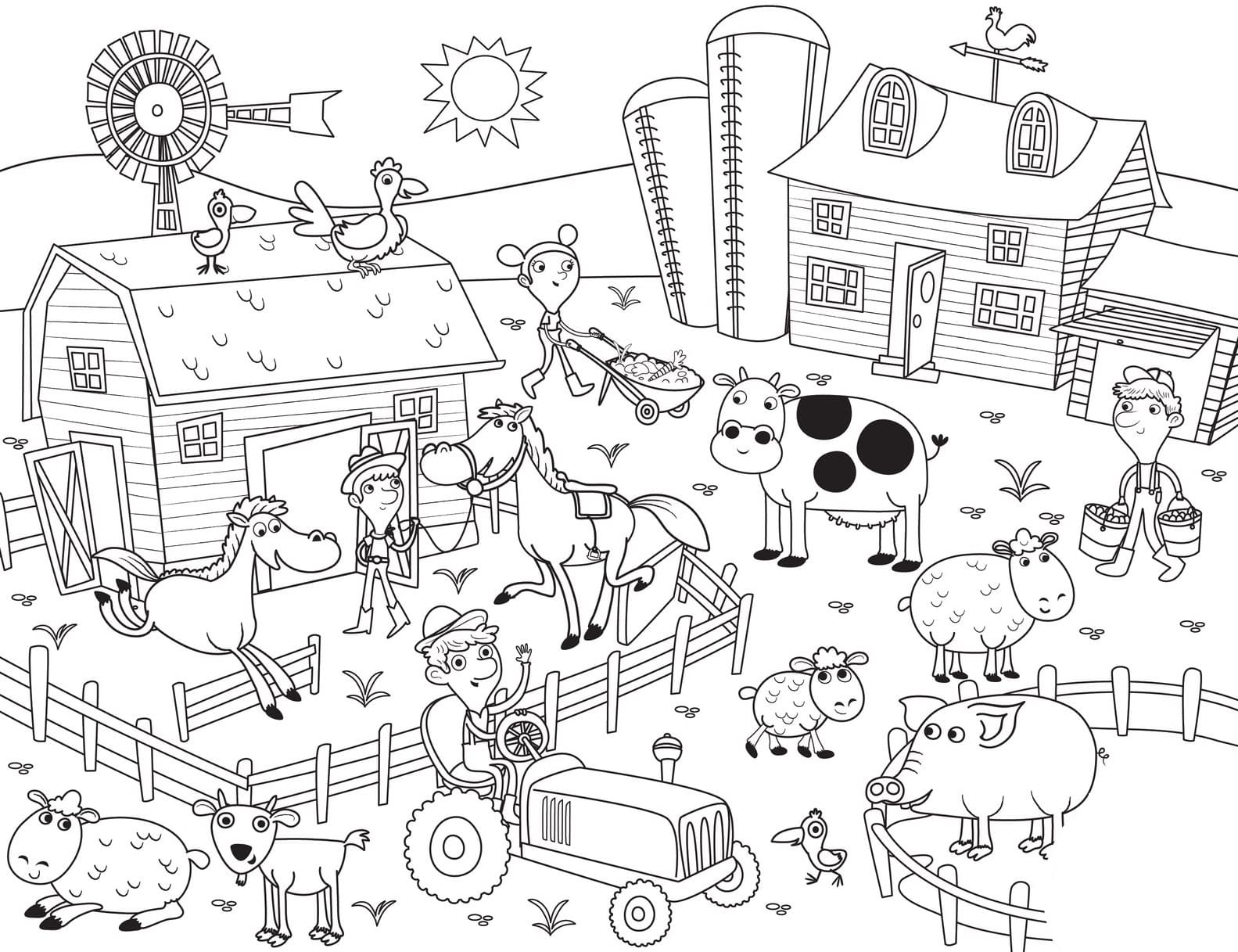
This "Coloring page of Farm animals and farmers working cartoon style" presents a wonderfully busy and cheerful farm scene, brimming with opportunities for creative expression. It is noted that the entire illustration exudes a friendly, approachable vibe, making it ideal for both novice and experienced colorists. The numerous elements, from the hardworking farmers to the various farm animals and structures, offer a rich canvas for exploring different colors and shading techniques. One can truly bring this bustling farm to life with careful consideration of light and shadow.
Beginning with the expansive background, it is recommended to establish the overall lighting. The prominent sun in the sky suggests a bright, clear day. For the sky, a vibrant light blue is a classic choice, perhaps fading to a lighter hue near the horizon. Gentle hills in the distance can be colored with varying shades of green, with some lighter areas for highlights and slightly darker tones to suggest undulations. The sun itself can be a cheerful yellow or orange, adding a warm glow to the scene. The clouds (implied by the clear sky, but if one wishes to add subtle white fluffy clouds, a very light grey shadow underneath would add dimension) would be minimal, allowing the bright sun to dominate.
Moving to the impressive farm structures, a traditional color scheme often works best. The large barn, with its prominent windows and pitched roof, is typically rendered in a classic barn red. To add depth, one can use a slightly darker shade of red for the areas under the eaves and where shadows would naturally fall, such as inside the open door. The wooden planks can benefit from subtle vertical lines of shading to suggest texture. The main farmhouse, appearing sturdy and inviting, might be colored in a cream, white, or light yellow, with its roof possibly in a contrasting dark grey or brown. The silos, with their ribbed texture, can be given a metallic grey or silver tone, using lighter and darker strokes to emphasize their cylindrical form. The windmill, an iconic farm feature, looks great with wooden blades and a metal frame, again utilizing browns and greys with careful shading for definition.
The farmers themselves are depicted in various active poses, engaged in their daily tasks. The farmer driving the tractor is waving cheerfully, while another is walking, carrying two full buckets. The female farmer is pushing a wheelbarrow. For their skin, natural peach or light brown tones are appropriate. Hair can be any natural color from blonde to black. Their clothing, like denim overalls for the men and practical attire for the woman, can be colored in shades of blue, brown, or green, perhaps with a plaid shirt or a simple white tee. Subtle rosy cheeks can add a touch of warmth and vibrancy to their faces. Shading should be applied gently to suggest the folds in their clothes and the roundness of their limbs.
The array of farm animals provides an exciting opportunity for diverse coloring. The large cow, with its endearing expression, is typically black and white, or brown and white. The existing black spots offer a guide, and one can shade the white areas with a very light grey or cream to give the body roundness. The sheep, lying down and standing, should have a textured appearance; a creamy white or off-white base with very light grey or beige squiggly lines or dots can simulate wool. The pig, leaning on the fence, is best colored a soft pink, with a darker shade for the underside and ears to create a sense of volume. The two horses, one jumping and one standing, can be brown, chestnut, black, or white, with their manes and tails in a complementary or contrasting shade. Shading on their muscular bodies will help convey their powerful forms. The smaller animals, like the goat, chickens, and duck, offer chances for more varied colors – white, brown, black for the goat, reds for chicken combs, yellow for beaks and chicks, and a soft white for the duck.
Finally, the various farm implements and natural elements complete the scene. The tractor, a central piece of machinery, can be bright red, farm green, or even blue, with its tires in dark grey or black, and metallic accents on its engine parts. The wooden fences should be colored in natural wood tones, with darker lines for grain. The baskets carried by the farmer can be light brown, suggesting woven material. The ground throughout the coloring page should primarily be shades of green for grass, with darker greens for shaded patches and lighter greens for sunlit areas. Small tufts of grass and plants add texture and interest. When coloring the overall scene, it is crucial to remember that layering colors gently and using blending techniques will create the most professional and aesthetically pleasing result. One should start with lighter tones and gradually build up to darker shades for depth and dimension, allowing the cheerful cartoon style to shine through.