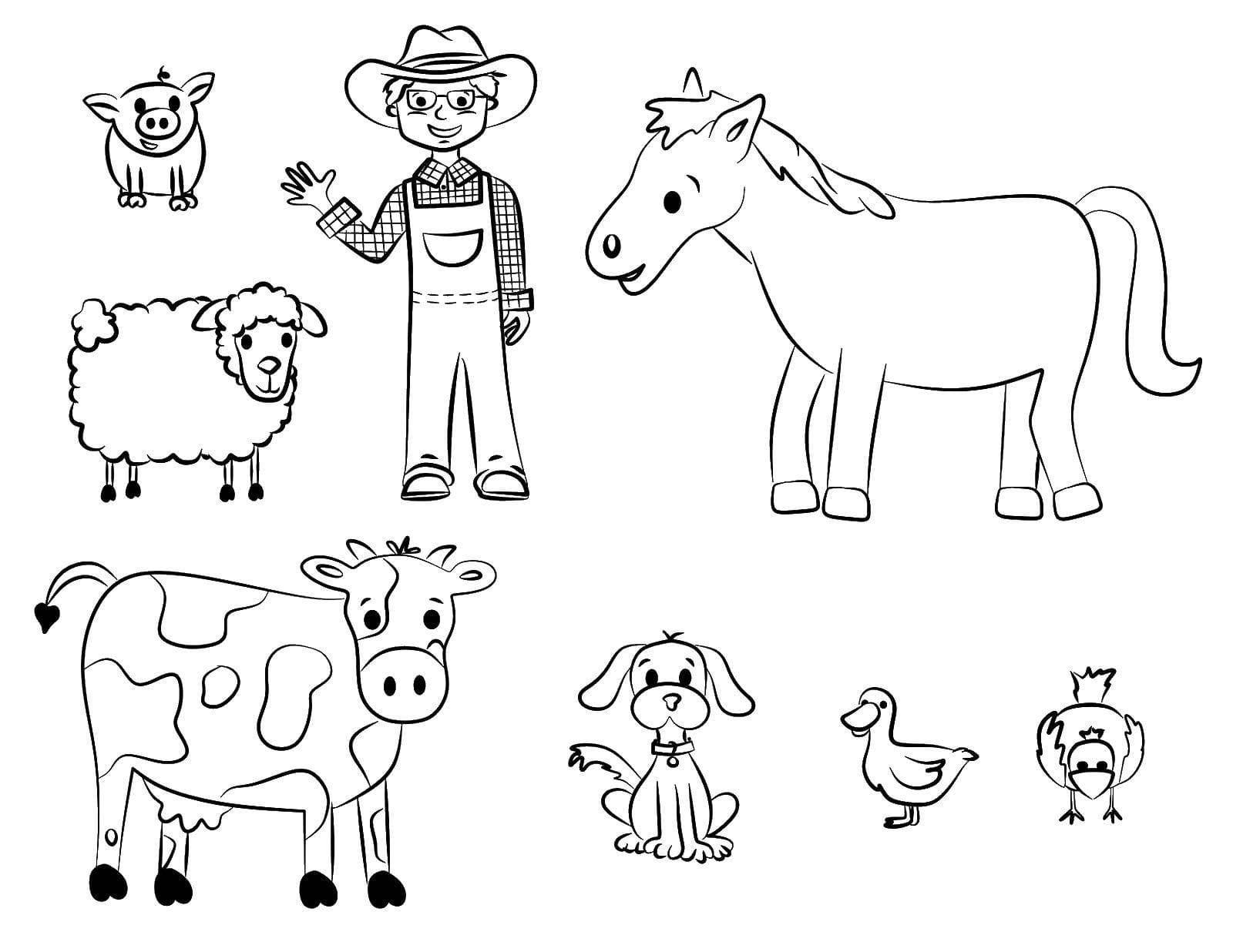
Guide to coloring page of Farmer and farm animals collection cartoon style
Diving into the Coloring page of Farmer and farm animals collection cartoon style offers a fantastic opportunity to explore basic anatomy, texture, and light sourcing in a fun, accessible format. This particular image presents a charming ensemble, each character radiating a friendly, approachable vibe that lends itself beautifully to vibrant coloring.
First, let’s consider the farmer, the central human figure in this collection. He is portrayed standing, facing forward with a genial smile, his right arm raised in a welcoming wave. He wears a classic farmer's hat, glasses, a plaid shirt, and sturdy overalls. For his skin, a light peach or beige tone is recommended as a base. One can add a hint of rosiness to the cheeks with a very light touch of pink, particularly where the sun might naturally catch. His hat could be a warm straw yellow or a rustic brown, with darker brown or grey shading under the brim to suggest depth and protection from the sun. The plaid shirt is a prime candidate for two contrasting colors, such as a cheerful red and blue, or an earthy green and yellow, carefully alternating to create the pattern. Shadows would naturally fall in the creases of his elbows and torso. The overalls, typically denim, call for a medium blue base, with deeper blues or even a touch of navy used for shading along the inner legs, behind the straps, and in the folds around the knees and waist. His shoes might be a practical dark brown or black, with a lighter highlight on the toe. The glasses could be a simple metallic grey or black.
Moving on to the delightful farm animals, one notes a variety of forms and textures. The pig, a plump and jovial character, is presented standing front-on. A soft pink is the obvious choice for its skin. To create dimension, one can use a slightly darker shade of pink or even a very light reddish-brown for the undersides, around the ears, and along the jawline. A lighter pink or even white can be left for the snout and belly for a subtle highlight. The sheep, a fluffy spectacle, demands attention to texture. Its woolly coat should primarily be an off-white or cream, but it is crucial to use light grey, very pale blue, or even a soft beige to suggest the individual curls and shadows within the fleece. Tiny, curved strokes work wonders to mimic the texture of wool. Its face and legs could be a light tan or grey-brown, providing a gentle contrast to the voluminous body.
The majestic horse stands tall, facing slightly to the right with a pleasant expression, its mane and tail flowing. One has many choices for its coat: a rich chestnut brown, a sleek black, or even a dappled grey. For a brown horse, various shades of brown are essential – a medium brown base, with darker browns for shading along the muscles, under the belly, and within the mane and tail to give them volume. Highlights can be created by leaving lighter areas or by gently erasing if using colored pencils. The powerful legs should also receive careful shading to convey their strength. A strong light source would cast shadows under the horse's body and legs.
The cow, distinguished by its iconic spots, is another key animal in the collection. It is depicted standing, displaying its distinctive markings. For a classic dairy cow, the base color should be white, with large, irregular black spots. Alternatively, one could opt for brown spots for a different breed. It is recommended to use a soft grey for subtle shading on the white areas to give the cow's body a rounded appearance, especially along the belly and hindquarters. The spots themselves should be solid and can also have slight variations in intensity to show depth. The udder, if visible, could be a very light pink or flesh tone. The small, sitting dog exudes friendliness, its tail seemingly wagging. Its fur could be a warm golden brown, a playful black and white, or a soft beige. Shading should follow the contours of its body, especially around the floppy ears and under the chin, giving it a soft, cuddly appearance. The collar could be a bright red or blue, providing a pop of color.
Finally, the smaller feathered friends, the duck and the chicken, complete this charming farm scene. The duck, depicted standing and facing right, typically calls for a white or brown body, with a vibrant orange or yellow beak and webbed feet. Shading with a very light grey or tan under the body will give it a pleasing roundness. The chicken, shown front-on with a characteristic comb, offers similar options. Its body can be white, speckled brown, or a light yellow. The comb and wattle are perfect for a bright red, while its beak and feet would be orange or yellow. Subtle feather indications can be made with light, short strokes of a darker shade of the body color. For all characters, remember to maintain consistency with your light source. Starting with lighter colors and gradually building up layers allows for greater control over blending and depth, enhancing the overall appeal of this delightful Coloring page of Farmer and farm animals collection cartoon style.