Coloring Elemental: A Journey Through Fire, Water, Air, and Earth
If you're a coloring fan and enjoy animated films that combine emotion, humor, and breathtaking graphics, then "Elemental" is a true goldmine. The Pixar film is an explosion (literally) of colors, shapes, and personalities that lend themselves perfectly to creating fascinating and fun coloring pages, suitable for both children and adults who want to relax with a creative activity.
In "Elemental," we find ourselves in an imaginary city where characters made of fire, water, air, and earth coexist. Each element has its own neighborhood, its own habits, and... its own colors, of course! The magic of the film lies precisely there: each character visually reflects the element from which they are composed, offering a precise color palette yet full of creative possibilities. In this article, I'll guide you through the main characters and give you some tips on how to have fun coloring them, playing with shades and textures.
Ember: The Fire Girl Who Warms Your Heart
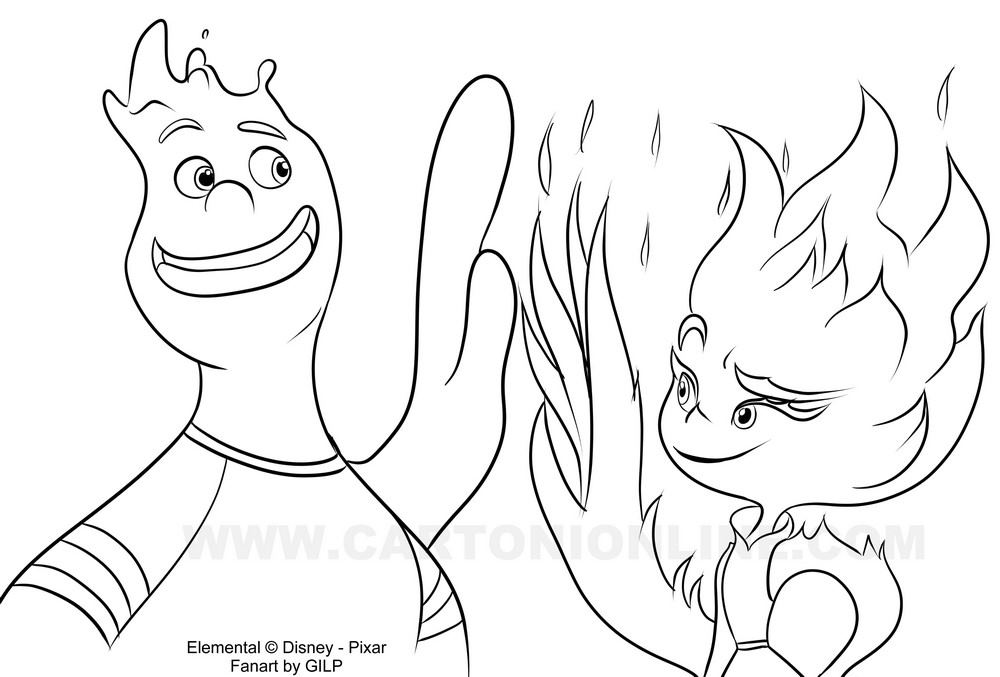
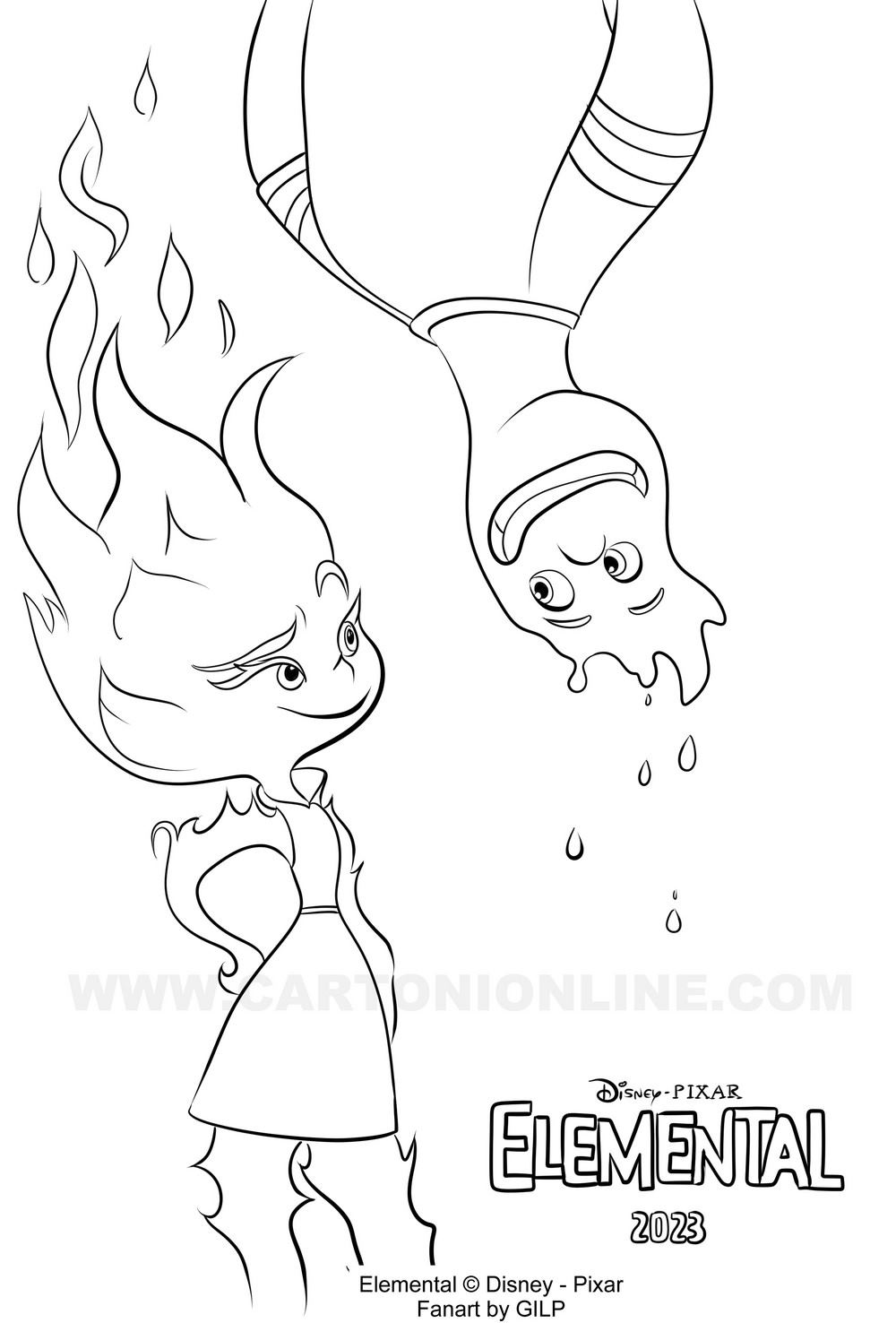
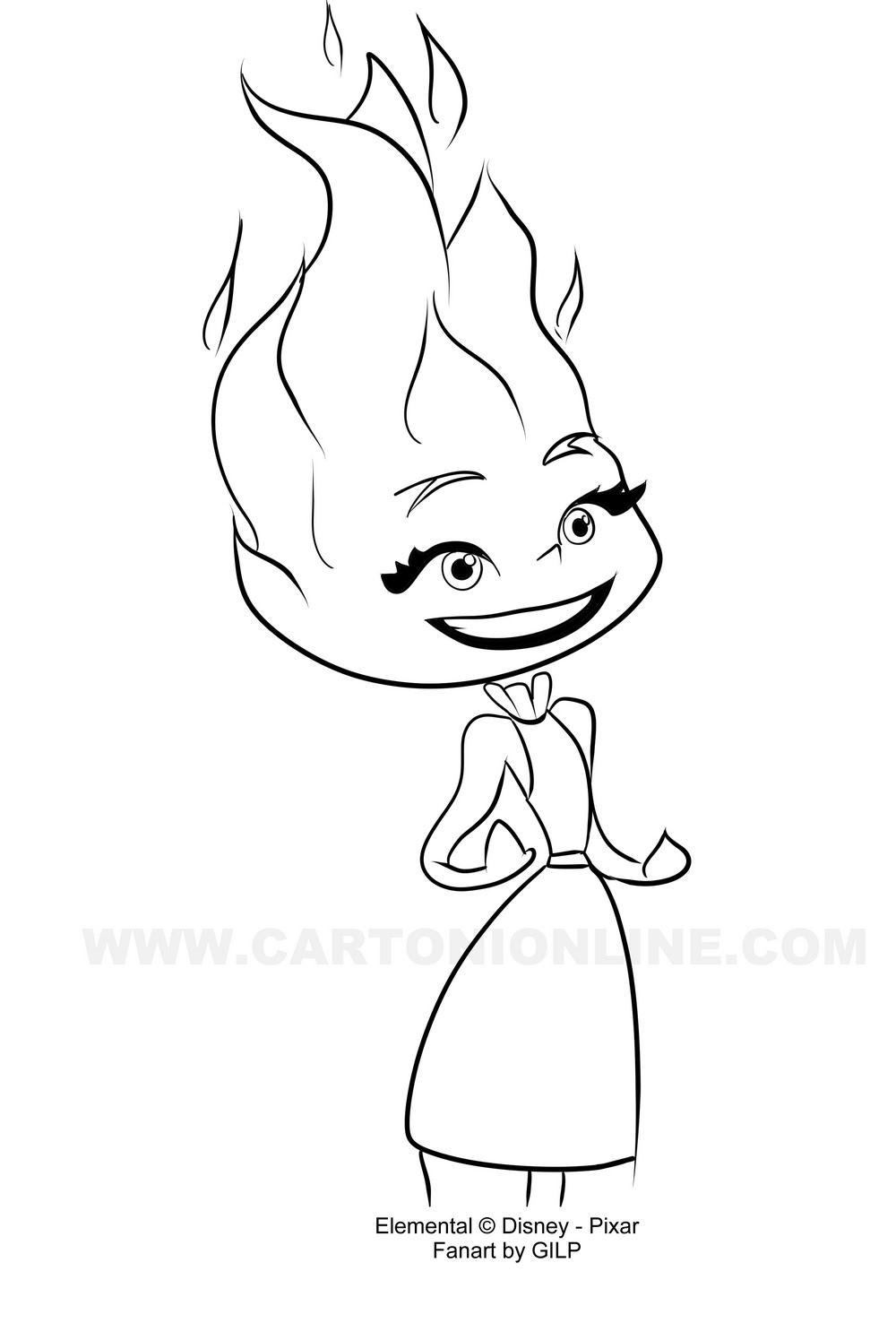
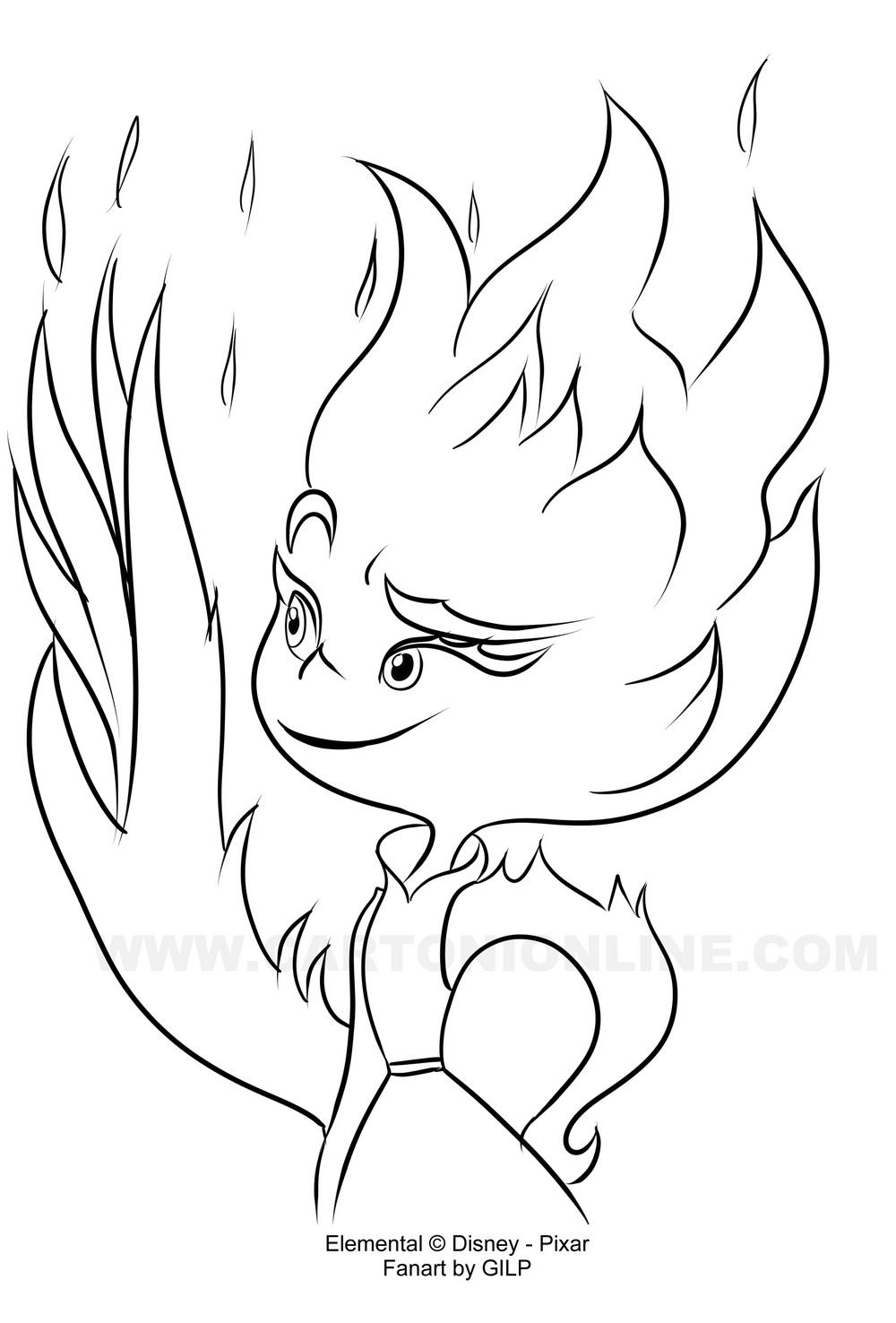
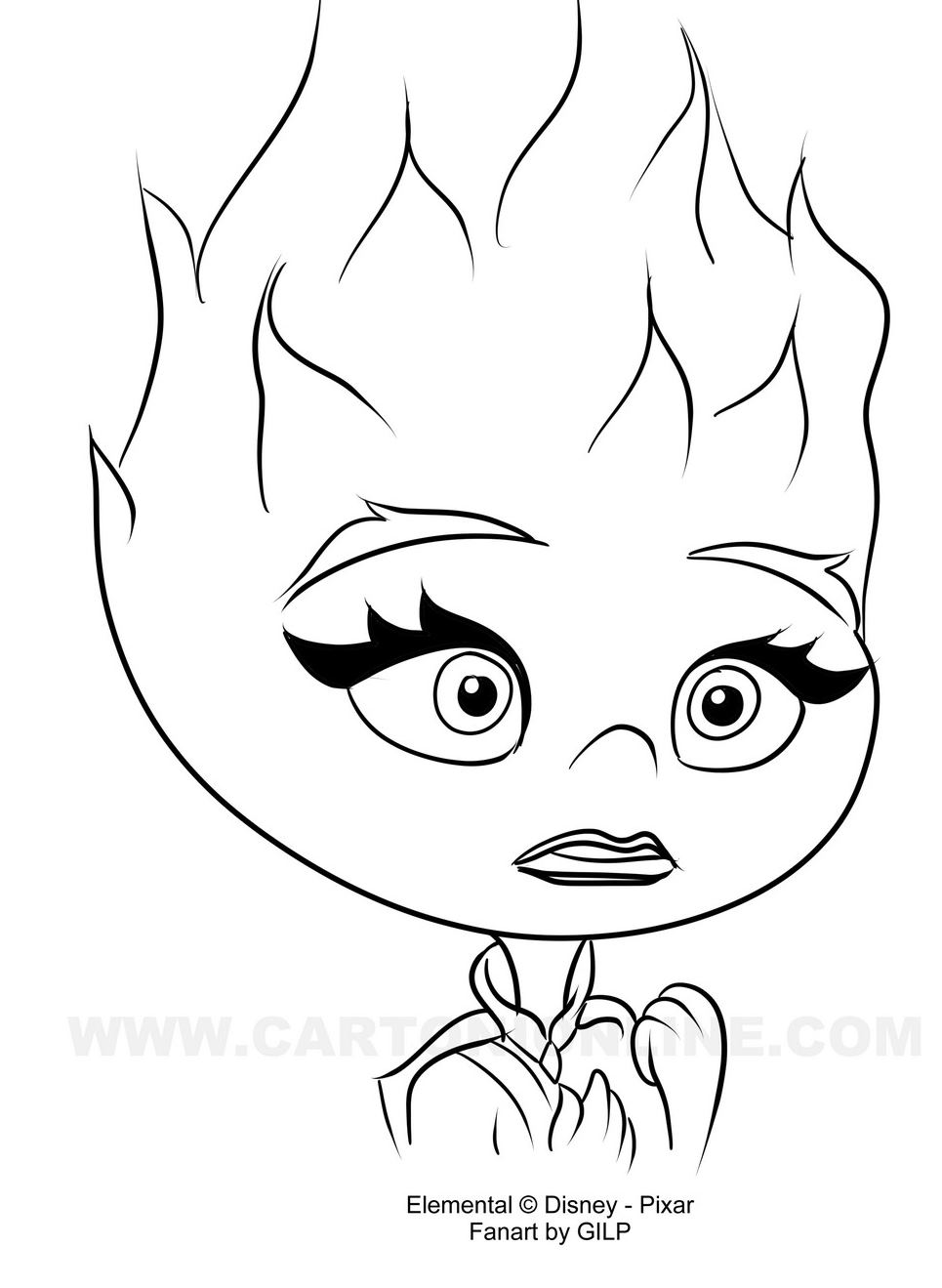
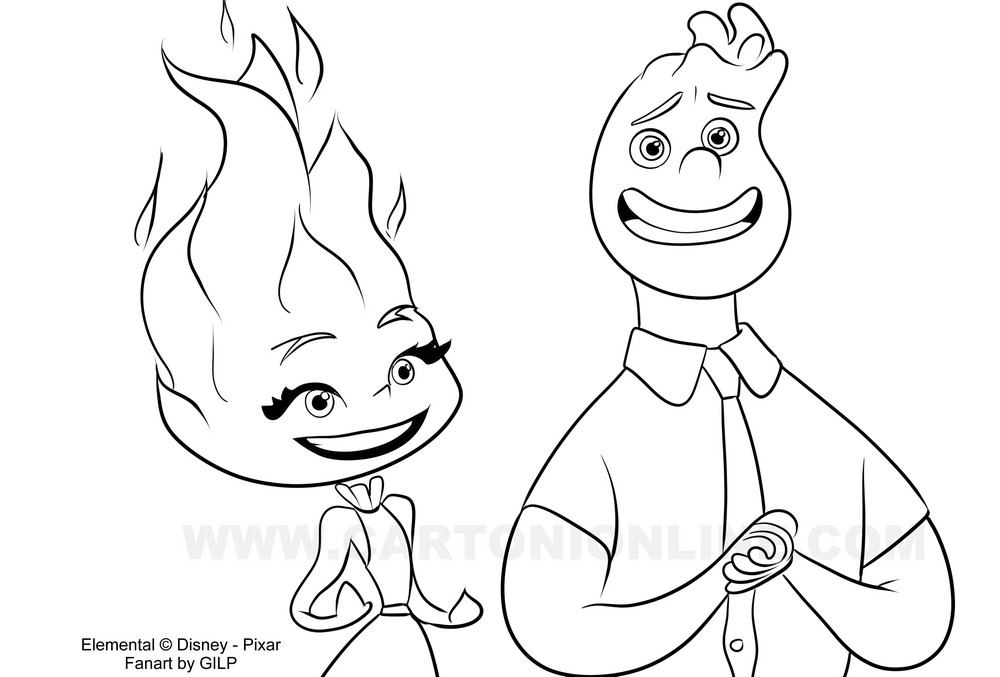
Let's start with Ember, the true protagonist of the film. Ember is made entirely of fire: she has a lively, dynamic silhouette, with flames dancing around her as if she were always in motion. Her dominant colors are bright orange, intense red, and hints of golden yellow. But be careful: this isn't a "flat" fire, all the same. When coloring her, try using different shades of orange and red, blending them with circular motions to imitate the effect of flames. Use a white pencil or gel pen to add highlights and give that sense of glow.
For her hair (which is actually an extension of the flame itself), you can exaggerate the contrasts a bit, making it almost incandescent. And for her eyes? They're a warm orange with a hint of melancholic sweetness: if you want to add a personal touch, try an amber or light copper color with a few highlights to make them really shine. Ember has a strong, stubborn, yet passionate personality: you can communicate all of this through the way you apply the color, perhaps with bold, vibrant strokes.
Wade: the soul of water who knows how to get excited
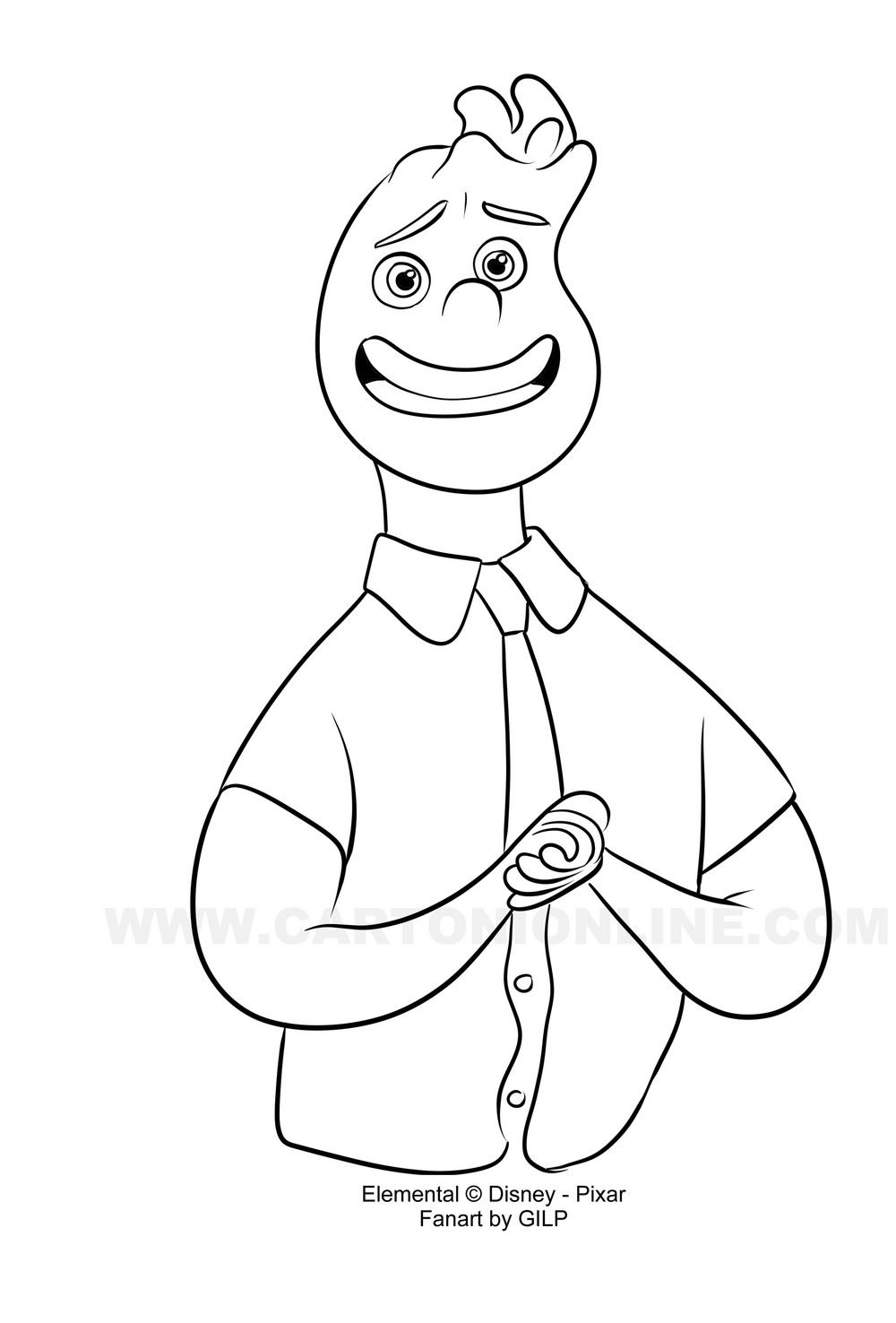
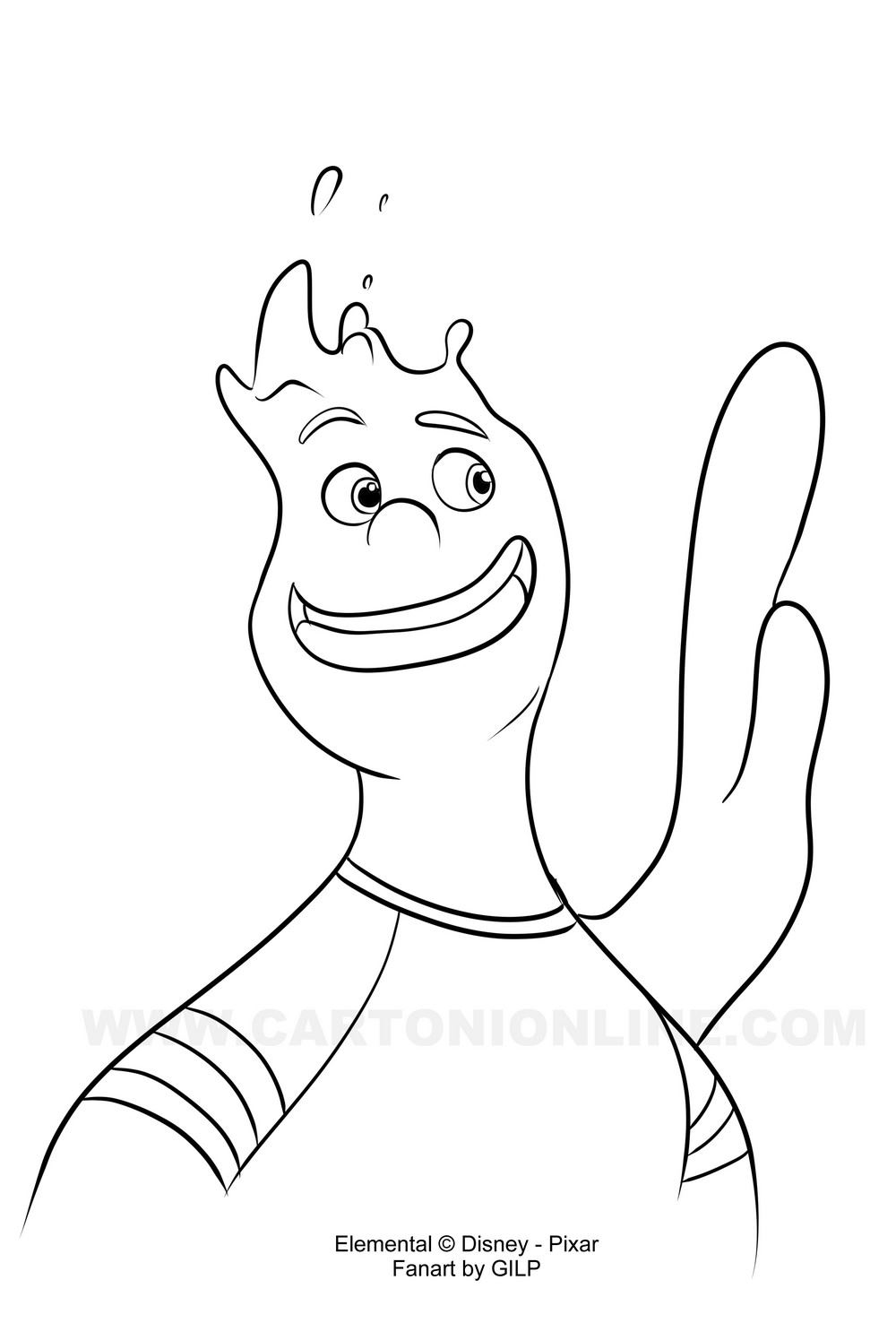
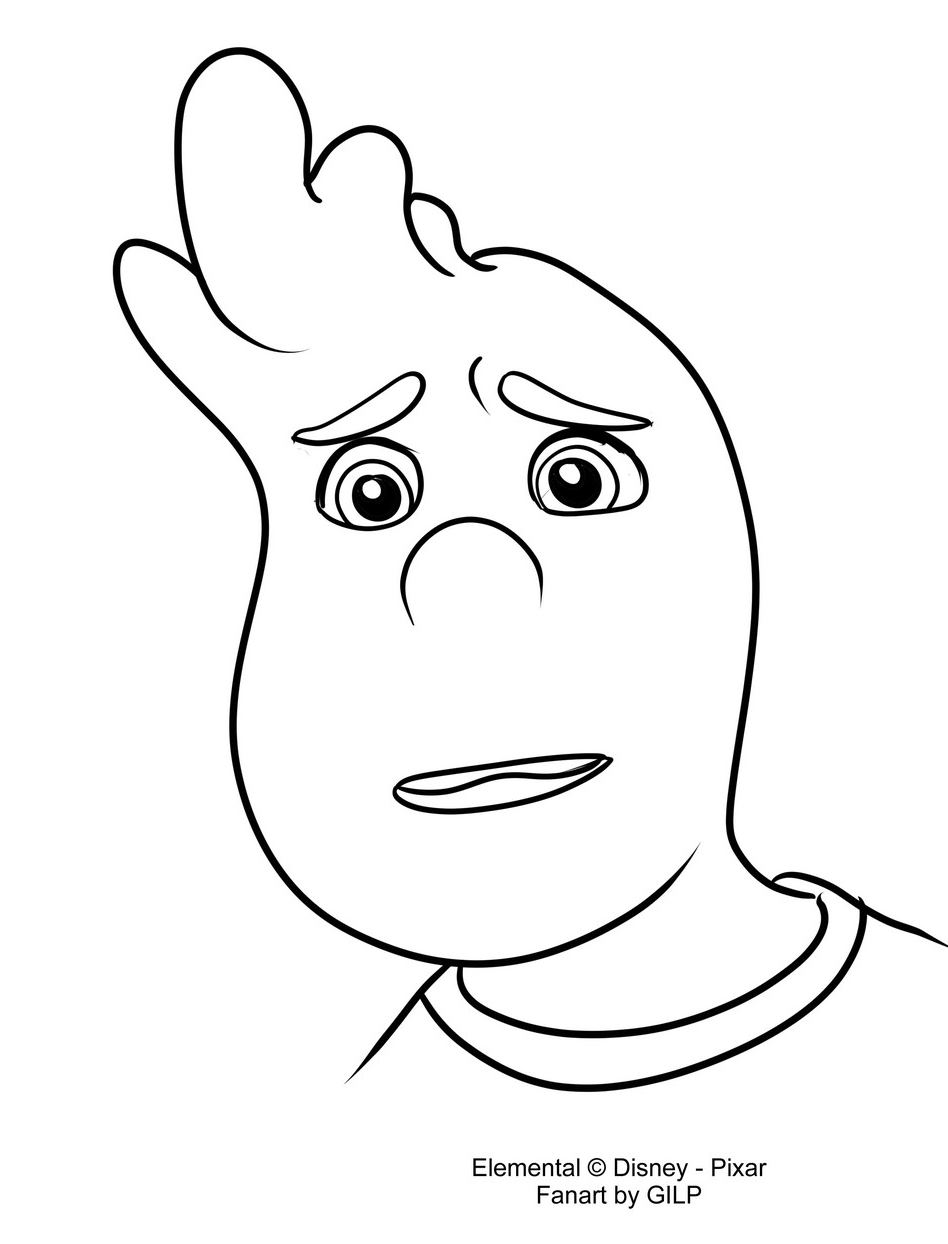
Wade is the other protagonist and, in every way, Ember's opposite. Composed entirely of water, Wade is fluid, transparent, and emotional. His design is soft, curvilinear, almost "liquid" in its contours. To color him, I recommend starting with a very light sky blue as a base, and then working with layering: more intense blues to create depth, touches of white for reflections and transparency. If you want a truly "aquatic" effect, you can use watercolor paints or even water-based markers, applying the color first and then blending it with a wet brush. The result will be super natural!
Wade also has very expressive details: his eyebrows, his large, deep-set eyes, his infectious smile. Don't overlook them! Although water tends to be a monochromatic element, with the right shades, you can bring it to life, playing with light and shadow. And if you want to add a creative touch, try drawing small droplets or ripples around him, as if he were moving or had just emerged from a dive.
Clod: the peppery cloud-child
Clod is a small character belonging to the element of Air, and is one of the cutest and cheekiest in the film. His body is made of fluffy white clouds, but that doesn't mean he's boring to color. On the contrary! To make him interesting, you can use shades of very light gray, ice blue, or even a light lilac to add depth. Don't just use white: play with shadows, imagine where the light comes from, and try to carefully blend the edges. If you want to make him more "cartoonish," you can outline some parts with a more marked line, like in classic cartoons.
Clod also has a cute, mischievous expression, with large eyes and movable eyebrows. Add a touch of pale pink to his cheeks to give him an even more lively look. And if there's a bit of wind around him in the drawing, you can have fun drawing dynamic lines, curves that evoke air turbulence, perhaps in light blue or pastel blue.
Fern: The Earth Boy Who Loves Nature
Fern represents the Earth element and has a solid, stable, yet very harmonious appearance. It's made of plants, branches, leaves, and moss. When coloring it, you can really go wild with greens: olive, emerald, mint, forest green... The key is to add variety, because a single green risks flattening the character. Add brown details for the branches and yellow to brighten the leaves, or use white to create the effect of morning dew.
Fern is calm, thoughtful, and moves with the serenity typical of nature. You can also convey this feeling in the way you color: soft strokes, light shading, almost as if you were caressing the paper. And if the drawing features flowers or insects around him (as often happens in the film), you can add pops of bright color to create contrast and make the scene pop.
General tips for coloring Elemental drawings
One of the best things about coloring pages inspired by *Elemental* is that each character represents a world of possibilities. You don't have to follow the "official" colors of the film: you can experiment, mix styles, and use special effects. For example, you can try the "wet blending" technique with water-based markers, or the "texture" technique with pencils to simulate flames, waves, leaves, or clouds.
Don't forget the background! While we often focus solely on the character, a good background can make the subject stand out and add depth to the scene. For Ember, a dark background lets her flames shine. For Wade, perhaps a cityscape reflected in the water. For Fern, a bright forest. For Clod, a blue sky with a few rays of sunshine.
Conclusion: turn on your imagination, element by element
Elemental-inspired coloring pages are an invitation to creativity and relaxation. No expensive tools or professional skills are needed: just a little time, a few colors, and the desire to be transported into the world of the elements. Whether you're an adult seeking a moment of zen or a child eager to explore, each character offers a unique opportunity to express your imagination. Remember: there are no mistakes in coloring, only new combinations to discover. And in a world where fire can love water... anything is possible!
The main characters of the film "Elemental" include:
1.Ember Lumen: Ember is the element of fire, daughter of Bernie and Cinder Lumen. She grows up working in the family shop and is notable for her short temper. She is gifted with a unique skill in glassmaking, which she uses to solve a critical situation in the film. Ember struggles with her family legacy and her desire to follow her own path.
2.
Wade Ripple: Wade is a water element and inspector, who gets involved with Ember when she has to report several infractions in their shop. He falls in love with Ember and together they face several challenges, including repairing a leak in a dam. Wade is fascinated by Ember's abilities and supports her on her personal journey.
3.
Bernie Lumen: Bernie, Ember's father, is also a fire element. He left his homeland to move to Element City, where he opens a shop. Bernie is a character who represents the bond with family traditions and expectations.
4.
Cinder Lumens: Cinder, Ember's mother, is less present in the plot than other characters, but is still an important figure in the Lumen family, helping to run the shop and supporting Ember.
5.
Gale Cumulus: Gale is an air element and Wade's employer. She plays a key role in the film when she decides the fate of the Lumen store, thus influencing the plot and the protagonists' decisions.
6.
Brook: Brook is Wade's mother and a supporting character in the film. She advises Ember to take a glassmaking internship, showing support and admiration for her skills.
These characters represent different faces of Element City society, each with their own challenges, fears and hopes, creating a story full of themes such as integration, identity and overcoming prejudice
10 Creative Ways to Use Coloring Pages
Coloring pages are not just a pastime for children, but they can be used in surprisingly creative and beneficial ways. Here are ten innovative ideas to make the most of these simple artistic tools.
Relaxation and Stress Reduction: Coloring is a meditative activity that can significantly reduce stress and anxiety levels in adults. It's an excellent way to break away from your daily routine and immerse yourself in a moment of tranquility.
Development of Hand-Eye Coordination in Childreni: For younger children, coloring helps improve hand-eye coordination and develop fine motor skills, preparing them for more complex tasks such as writing.
Stimulation of Creativity: Even if the drawings have pre-established outlines, choosing colors and coloring techniques stimulates creativity in both children and adults.
DIY decorations: Colorful designs can be used as original decorations. Framed, they can embellish the walls of your home or become personalized gifts.
Teaching Tools: Coloring pages can be used as teaching tools to teach children about colors, shapes, animals, plants, geography and more.
Art Therapy: Coloring is often used in art therapy to help people express feelings and thoughts that are difficult to verbalize.
Group Activities: Coloring can be a social activity, great for bringing people of all ages together in a relaxed, collaborative environment.
Improved Concentration: This activity requires attention to detail, helping both adults and children improve their ability to concentrate.
Motor Rehabilitation: For those recovering from injuries that have affected hand motor skills, coloring can be a useful and enjoyable exercise.
Active Meditation: Coloring can be considered a form of active meditation, where the act of coloring allows you to reach a state of awareness and mental presence.
In conclusion, coloring pages offer a wide range of benefits and possibilities, making them much more than just a pastime. Whether it's developing skills, relaxing, or expressing yourself creatively, there's always a good reason to pick up some colored pencils and start coloring.