Analyzing Julieta Madrigal's Healing Touch
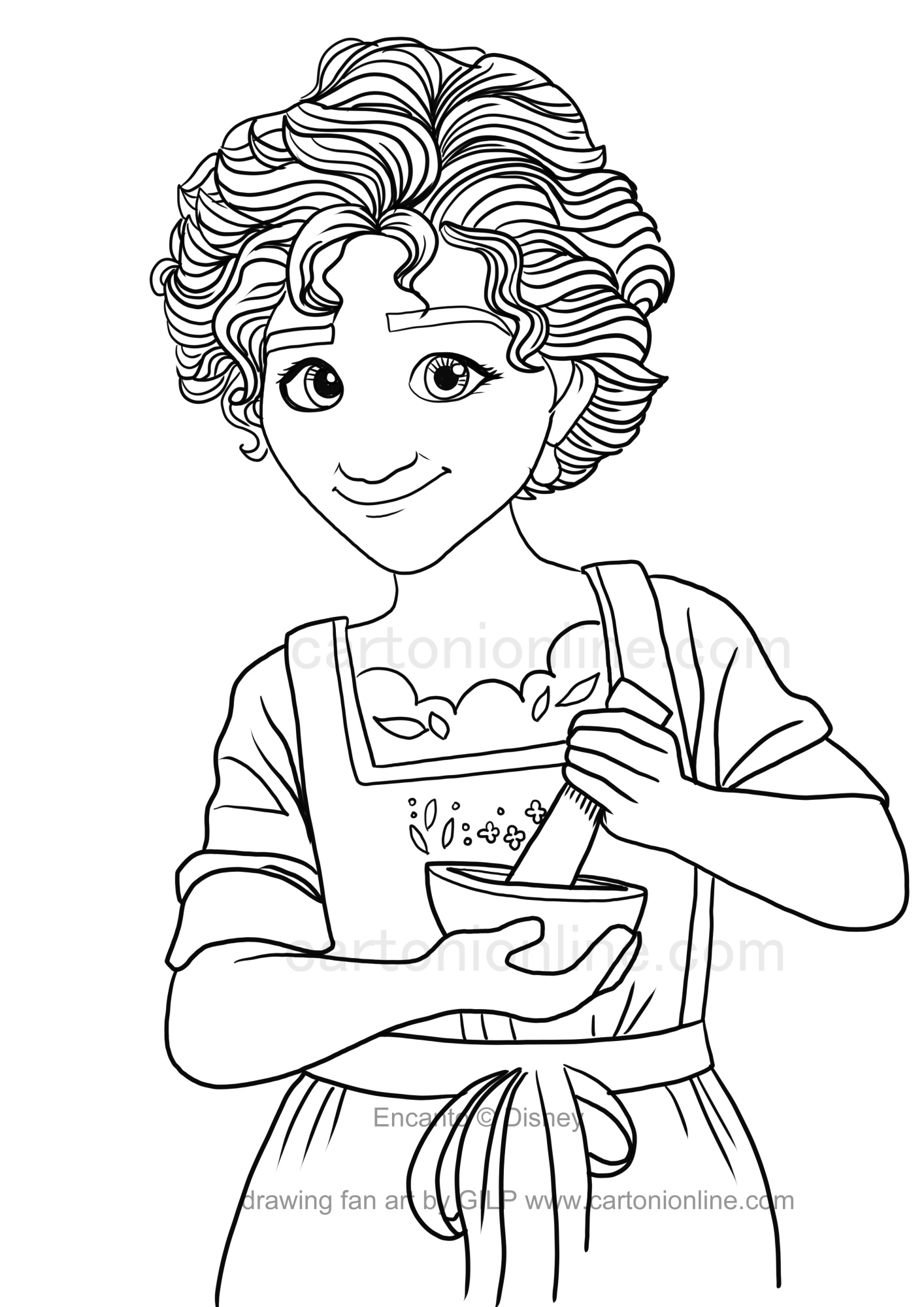
Right off the bat, you're looking at a delightful depiction of a character known for her nurturing spirit. Notice the composition: it’s a waist-up shot, drawing focus immediately to her hands and expression. This framing is crucial for emphasizing her iconic role as the family's healer through food. Her pose, with both hands engaged in holding a bowl and pestle, isn't just a casual gesture; it's a testament to her constant readiness to mend and care, always preparing a remedy.
Her gentle demeanor truly shines through in her expression. The slight tilt of her head, coupled with that warm, knowing smile, speaks volumes. Her eyes, open and kind, are somewhat narrowed, suggesting a focused tenderness, perhaps even a hint of amusement or deep empathy. There’s a calming presence about her, a sense of quiet confidence in her abilities, which is a key aspect of her character. The subtle raising of her eyebrows adds to that approachable, caring gaze.
When it comes to coloring this piece, consider the palette that defines Julieta Madrigal. Her curly hair should be a rich, deep brown, allowing for plenty of variation in tone to highlight those intricate waves. For shading, think about where light would naturally hit the crown and the outer edges of the curls, leaving deeper shadows in the underlayers to give them volume and texture. Don't be afraid to use a slightly warmer brown for highlights and a cooler, deeper brown for shadows.
Her skin tone is a warm, medium tan. When applying color, remember that the face will have soft variations. A touch of rosiness on the cheeks and lips will bring life to the portrait. Shading should be subtle and blended, focusing on areas like under the chin, around the nose, and gently beneath the lower lip to define her features without making them too sharp. Her eyes are dark brown, but adding a tiny glint of light in each pupil will make them sparkle and feel more alive.
The outfit requires attention to detail. Her blouse is typically a soft teal or aqua, often with delicate embroidery. The apron, a central element, is usually an off-white or cream color. The scalloped trim around the neckline, adorned with small leaves or floral patterns, offers a chance for subtle green and yellow accents. The designs on the main body of the apron, often depicting herbs or abstract patterns, can be brought to life with shades of green, earthy reds, or even a touch of golden yellow.
For shading the clothing, pay attention to the folds and drapery. The loose sleeves will have soft shadows in their creases, while the apron strings tied at the back will create deeper, more defined shadows where they cinch the fabric. The bowl and pestle, typically made of earthenware or wood, can be colored in natural browns, beiges, or light grey tones. Add circular shading inside the bowl to suggest its depth and contour, and cast a soft shadow underneath it to anchor it in space. A consistent light source from the top-left or top-right will ensure all shadows fall naturally, creating a cohesive and vibrant image.