Analyzing Luke Hobbs: A Coloring Masterclass
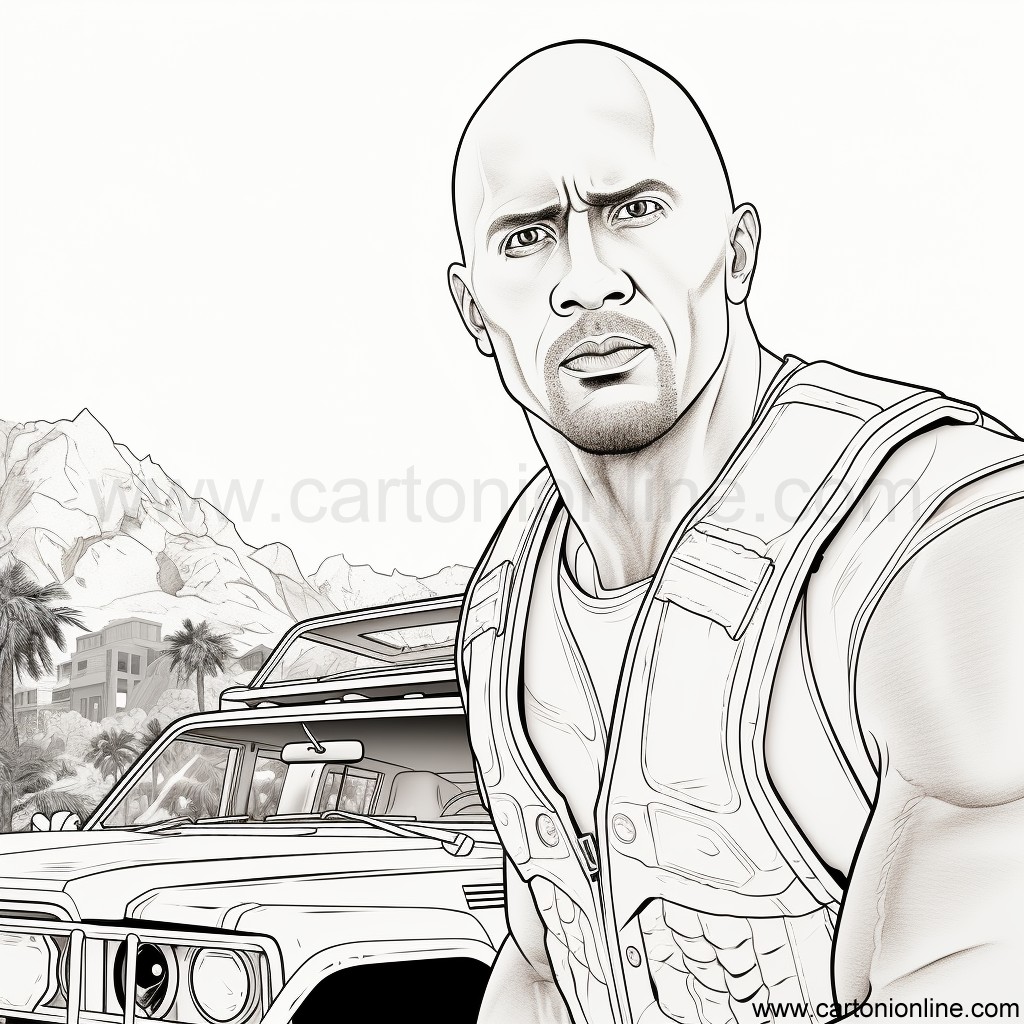
Let's dive right into this powerful rendering. You've got a fantastic outline of Luke Hobbs (Dwayne Johnson), captured in a classic "I mean business" stance. His pose is direct, slightly angled, with that unmistakable intensity focused right at the viewer. He’s positioned close, commanding the foreground, with his substantial physique hinting at immense strength, even through the tactical vest. That right arm, subtly flexed, contributes to the overall sense of readiness and power.
The expression on his face is spot-on for Hobbs: utterly determined and focused. The furrowed brow, narrowed eyes, and slightly downturned lips convey a serious, no-nonsense attitude. This isn't a man to be trifled with, and capturing that essence with your coloring choices will be key. Pay close attention to the deep lines around his eyes and the slight tension in his jaw—these details are crucial for selling the emotion.
When it comes to coloring, start with Luke Hobbs's skin tone. Dwayne Johnson has a warm, medium-dark olive complexion. Lay down a base of warm brown, then introduce darker, richer browns for the shadows – think under the brow, along the jawline, the sides of the nose, and the defined contours of his neck and arm. For highlights, use a slightly lighter, warmer brown or even a touch of orange-brown on the prominent areas like his forehead, cheekbones, and the bridge of his nose to give it that realistic sheen. Remember, he's bald, so the head itself is part of that skin tone, requiring subtle shading to maintain its rounded form.
His goatee should be a dark brown or black. Don't just block it in; use short, fine strokes to mimic stubble texture. This adds realism and prevents it from looking flat. For his outfit, the tactical vest presents a great opportunity for varied shading. Opt for practical, desaturated colors like an olive green, a tactical grey, or a desert tan. The multiple pockets, straps, and panels mean a lot of shadow work. Use a darker shade of your chosen base color for primary shadows and a deep, desaturated brown or dark grey for the deepest crevices and under the overlapping parts. The t-shirt underneath could be a contrasting muted color—a cool grey or a deeper olive to provide some visual break.
Moving to the background, you have distant mountains, palm trees, buildings, and a robust 4x4. For the mountains, think atmospheric perspective: desaturated blues, grays, and purples will make them recede into the distance. Keep the colors light and hazy. The palm trees need vibrant greens for the fronds and earthy browns/grays for the trunks, ensuring they stand out without overpowering Hobbs. The buildings in the mid-ground could be light desert tones—sands or stucco colors—but keep their detailing subtle. Finally, the vehicle, likely a trusty off-roader, could be a dark green, a sandy tan, or even a metallic charcoal grey. Don't forget to add highlights to the chrome on the grill and headlights, and a dark, reflective quality to the windows, perhaps with a bright specular highlight.