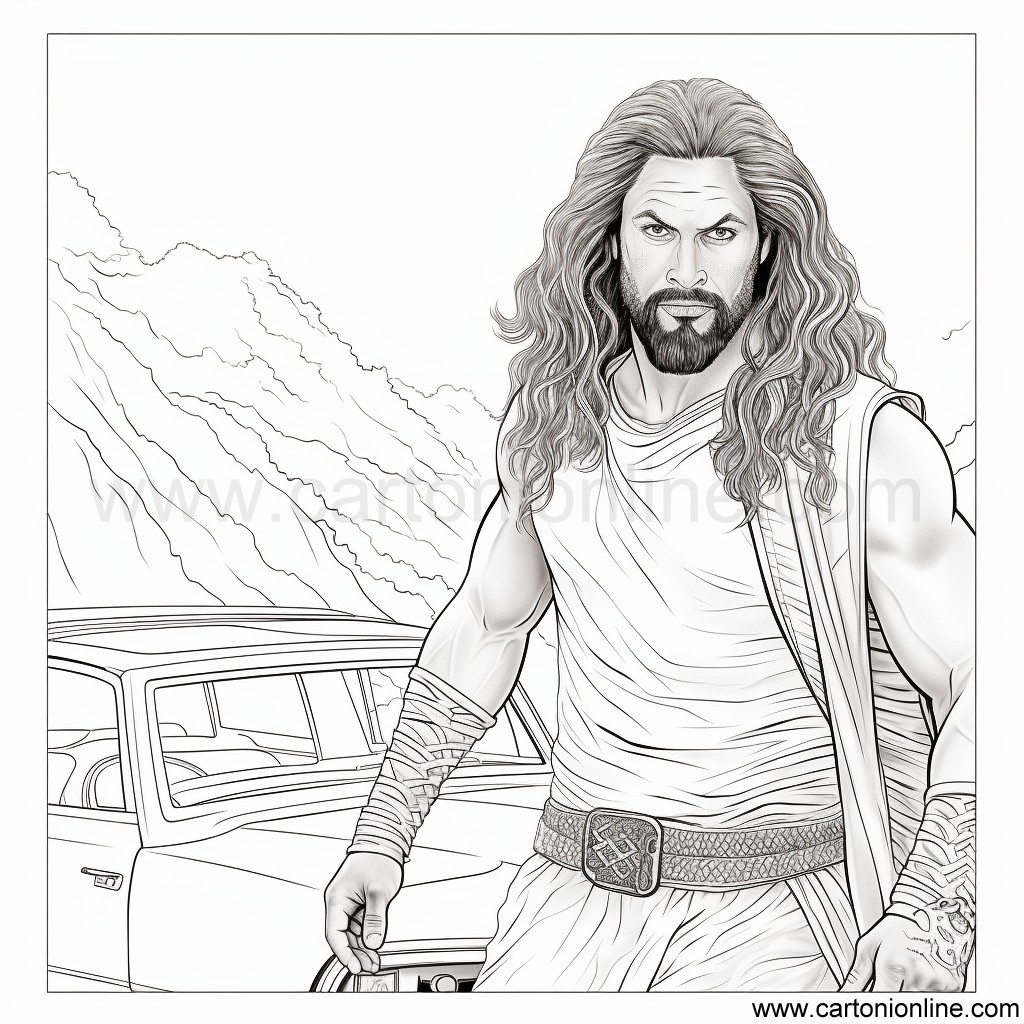
Analyzing Dante Reyes (Jason Momoa): A Masterclass in Presence
You've captured Dante Reyes (Jason Momoa) radiating intense energy. His pose, leaning casually against the classic car, isn't relaxed; it’s coiled power, a readiness beneath the surface. Observe his weight distribution, one hand resting, the other hanging, contributing to that 'in-control' vibe.
His expression is crucial. Those eyes are piercing, a direct, unwavering gaze. A subtle furrowed brow suggests deep thought or simmering intensity, not anger, but focused determination. The set of his mouth, framed by the rugged beard, reinforces this tight, serious demeanor. Capture this tension for maximum impact.
When coloring his hair, prioritize volume and texture. His long, wavy locks are a defining feature. Use rich, deep browns, perhaps with hints of auburn or sun-kissed lighter strands. Layer lighter tones over darker ones for a dynamic look. Deep shadows are essential underneath the main mass, while highlighted waves define movement.
For his skin, aim for a warm, sun-baked complexion. Medium olive tones with bronze undertones work well. Focus on shading that defines the strong planes of his face – prominent cheekbones, sharp jawline, and powerful neck muscles. Subtle highlights on his forehead, nose bridge, and arms will create a healthy glow, emphasizing his physique.
His attire offers rich detailing. The flowing tunic, likely off-white or light earthy, needs soft, graduated shading for natural drape. Contrast with the intricate belt – the buckle demands metallic treatment (aged bronze/silver) with strong highlights and shadows to make its design pop. The belt itself could be textured, earthy brown.
Arm wraps add to his rugged aesthetic. Use neutral linen or leather colors, using shadow to show layered texture; slight shading variations prevent flatness. For the car, a deep metallic color (dark blue/green) with sharp reflections and chrome details needs bright, crisp highlights.
Background mountains are best with atmospheric perspective. Use desaturated blues, grays, or purples, lighter at the top and darker towards the base to suggest distance and scale. Soft, diffused shadows help them recede. Maintain consistent, dramatic outdoor lighting to create impactful shadows and highlights, giving the piece depth.