Huggy Wuggy Character Analysis
Analyzing This Huggy Wuggy Line Art
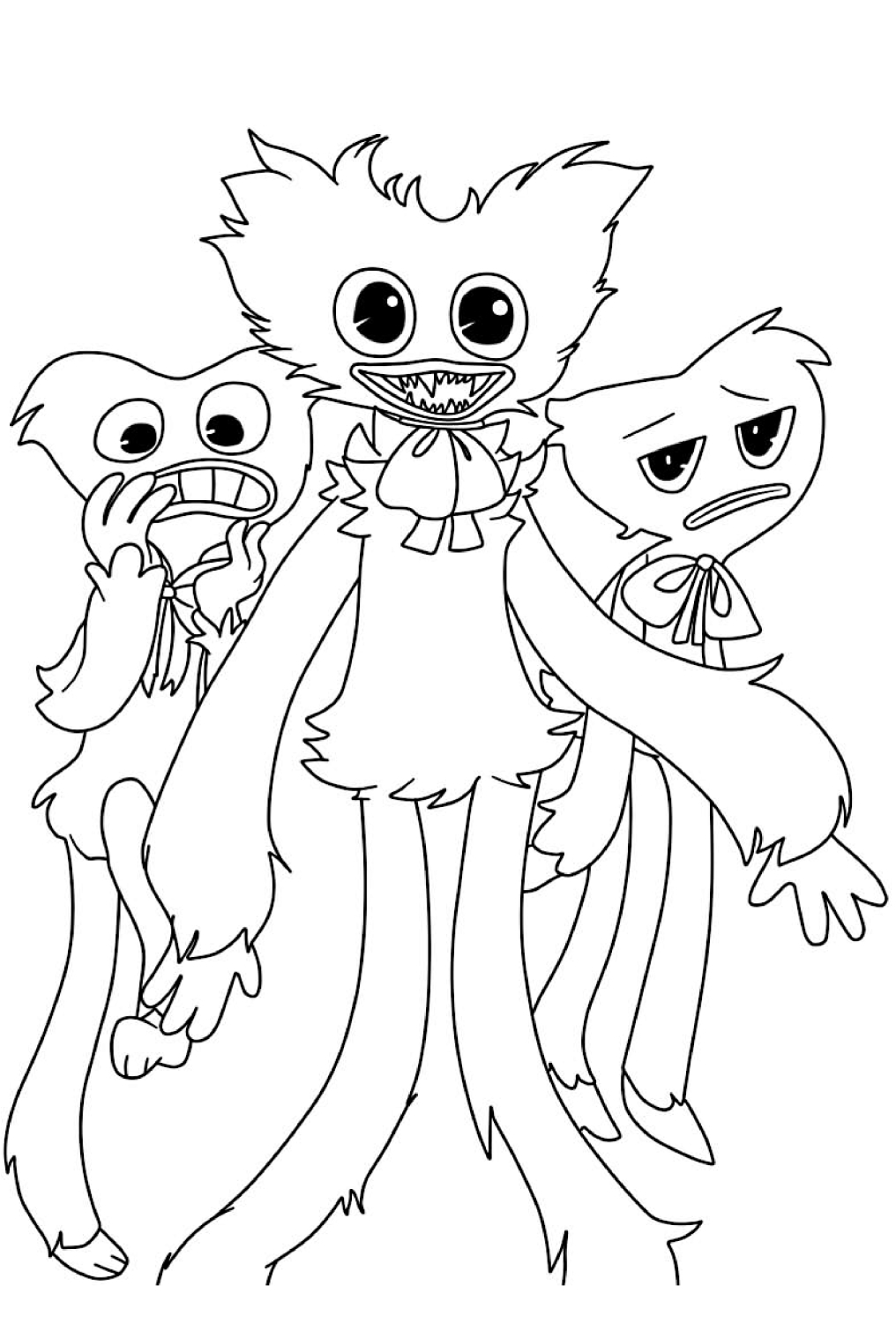
Let's get straight into this Huggy Wuggy line art. The central figure, our main man Huggy Wuggy 14, takes center stage with a commanding, upright pose. His characteristic long, gangly limbs extend downwards, creating a stable, imposing silhouette. The wide-eyed stare and monstrous, toothy grin are iconic, perfectly capturing that eerie, dual nature of the character – both inviting and deeply unsettling. The sharp, numerous teeth are a key feature that demands attention.
For colors, Huggy Wuggy 14 really shines in a vibrant, saturated blue. This instantly recognizable hue is crucial. The bow tie offers a fantastic opportunity for contrast; a bright red or even a deeper crimson would make it pop. His teeth should be a stark white for that cartoon horror feel, but consider very subtle light grey or even a touch of cream in the crevices for added depth and realism. Keep the large, circular eyes simple: classic black pupils on a white sclera.
Shading is where you’ll transform this line art. Forget smooth gradients for Huggy Wuggy 14; his fur requires short, textured strokes that follow the contours of his body. Pick a consistent light source, say from the top-left, to guide your shadows. Core shadows will fall along the undersides of his limbs, beneath his chin, and where his arms meet his torso, giving him volume.
Crucially, cast shadows are your friend. Implement darker shades of blue or a deep indigo where limbs overlap, or between those many legs splaying out at the bottom. These dark areas push elements back, creating a sense of depth. Apply a slightly darker blue, still using those fur-like strokes, in all shadowed zones. For highlights, a subtle lighter blue on the most exposed parts – head, shoulders, outer arms – will suggest soft, shaggy fur without losing his formidable presence.
Don't overlook the secondary characters. The scared Huggy on the left, hands raised and eyes wide with fright, offers a chance for a muted, sickly green or a paler blue to amplify its distress. The sad Huggy on the right, with its droopy expression, could benefit from a somber purple or a desaturated, melancholic blue. Each bow tie on these figures can also have subtle shadows to indicate fabric folds.
Ultimately, a successful rendering of this piece relies on embracing those furry outlines. Let them guide your brushstrokes and shading direction. By carefully distinguishing each character through thoughtful color choices and expert shadow placement, you’ll produce a truly dynamic and engaging artwork, far beyond a simple line drawing.