Analyzing the Lurking Presence of Huggy Wuggy
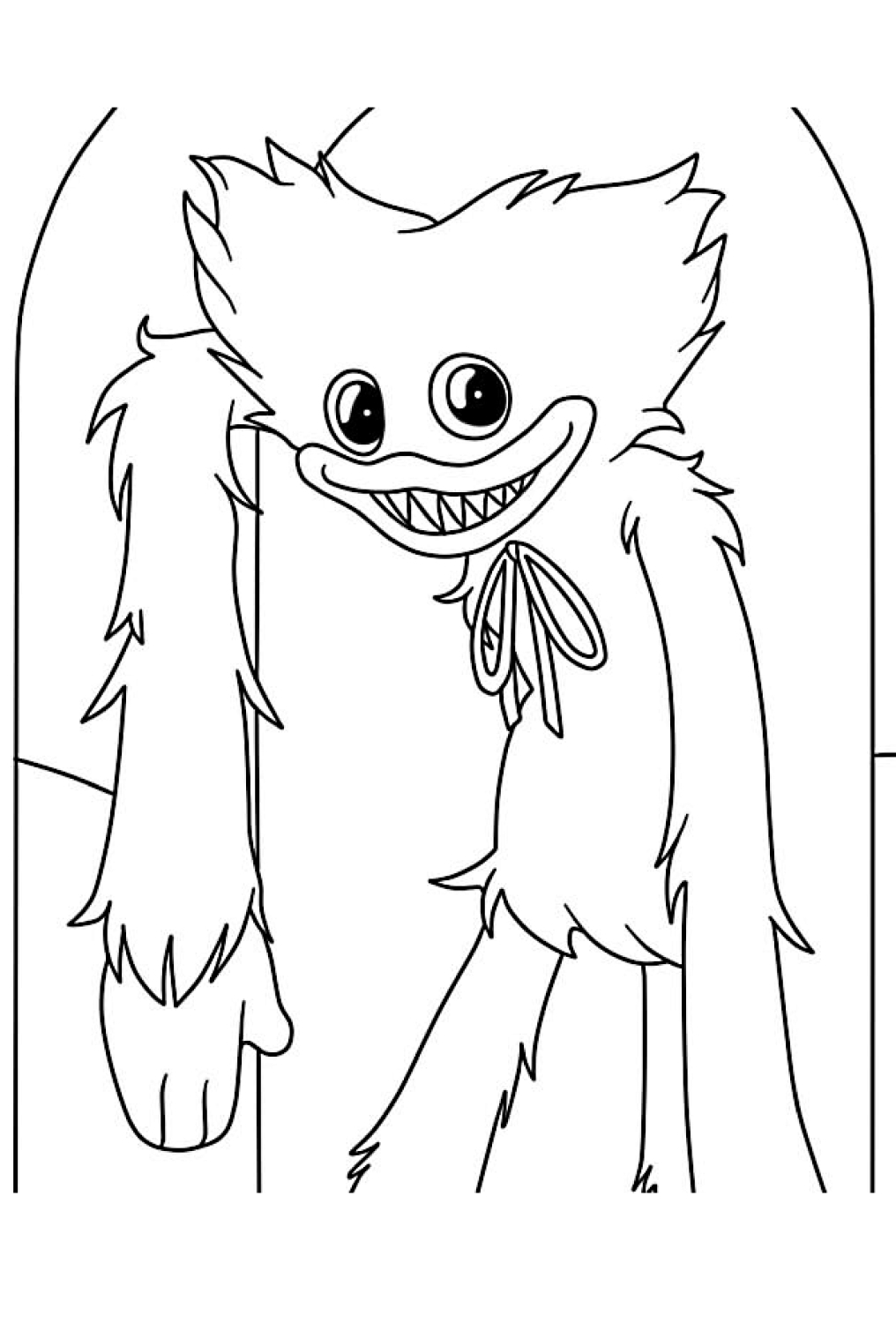
Alright, let's dive into the core of what makes this particular Huggy Wuggy illustration so compelling. You've got a fantastic outline here, ready for some serious impact. The character is leaning forward, almost inquisitively, creating an immediate sense of engagement. This isn't just a static figure; there's a palpable forward momentum, a predatory lean that hints at movement just beyond the frame. The long, gangly limbs are exaggerated beautifully, especially the prominent left arm extending downwards, adding to that unsettling, almost awkward grace he's known for.
That expression, though. It’s classic Huggy Wuggy, isn't it? The wide, almost unnervingly friendly smile, contrasted sharply by those rows of razor-sharp teeth. It’s pure psychological horror in line art. For coloring, make those teeth pop! A bright, crisp white is essential, but don't just leave them flat. A very subtle cool grey wash on the shadowed undersides will give them three-dimensionality and make them feel even sharper. The interior of the mouth should be a deep, dark cavern – think pure black or a very dark, desaturated maroon to enhance the menacing depth.
The eyes are another critical element. Those large, circular, perpetually wide-open pupils give him an innocent yet utterly fixed stare. Keep the pupils a dense black, perhaps with a tiny, off-center white highlight if you're feeling ambitious, to suggest a reflection and add a spark of life (or un-life). The sclera can remain stark white for that doll-like, unsettling quality, or if you want to push the creepy factor, a very pale, almost sickly yellow could work wonders.
Now, let's talk about color and texture for the main body. The jagged lines are clearly indicating fur, and you want to honor that. For the iconic blue, consider starting with a medium to dark cobalt or a rich royal blue as your base. When shading, think about the light source – let's assume it's coming from slightly above and to the front. This means the undersides of the fur tufts and any areas where the limbs recede will be darker. Use a deeper indigo or even a blue-black for these shadow areas, applying it with short, directional strokes that follow the fur's flow. This technique builds texture and depth without relying solely on flat gradients.
Don't forget the signature red bowtie! This is your opportunity for a vibrant splash of contrasting color. A strong, primary red is perfect here. For shading, use a slightly darker, more muted red in the folds and creases of the bow, and a brighter, more saturated red for the highlighted areas. This will give it dimension and make it stand out against Huggy Wuggy's blue fur. The texture of the bowtie should be smooth compared to the fur, so use softer, blended shading rather than the short strokes you'd use for the fur. This distinction in texture adds another layer of visual interest to this compelling portrayal of Huggy Wuggy 16.